A Good Financial Plan Should Keep Looking Forward
Financial planning meetings can cover a lot of ground.
For some people, that can be surprising. You might expect a review meeting to focus mainly on how investments have performed, what markets have been doing and whether anything needs to change.
Those things matter. But they are only one part of the conversation.
A good financial plan should always connect your money to what is happening in your life and where you want to go next.
That is why we spend just as much time looking forward as we do looking back.

Your investments are only one part of the plan
Investment performance is important, and it is something we will continue to review with you.
But investment returns alone do not tell us whether your financial plan is working.
Your circumstances may have changed. Your priorities might be different. You may be earning more, thinking about retirement, growing your family, changing careers, selling a business or simply looking at life differently than you did twelve months ago.
If the plan does not change with you, it can gradually become disconnected from what you are actually trying to achieve.
That is why our planning conversations go beyond investment performance.
We want to understand where you are now, where you are heading and whether the decisions you are making today are still helping you get there.
The questions we keep coming back to
There are a few simple questions that help guide these conversations.
Have your goals changed?
A lot can happen between meetings.
Some changes are significant, such as having a child, changing careers, buying or selling a property, selling a business or deciding you would like to retire earlier.
Others happen gradually. Your priorities shift, your income changes or something that felt important a few years ago simply does not matter as much anymore.
Your financial plan should reflect the life you are living now, not the one you were living when the plan was first created.
Are you still on track?
Once we understand where you want to go, the next question is whether your current path is likely to get you there.
If you are on track, that can provide valuable confidence that you do not need to make unnecessary changes.
If you are not, finding out sooner gives you more time and more options to adjust.
Being off track does not always require a major overhaul either. Sometimes relatively small changes made early can have a meaningful impact over time.
Are there any gaps we should address?
A plan can look great when everything goes according to plan.
Life, unfortunately, does not always work that way.
Part of financial planning is considering what could disrupt your progress and whether there are sensible ways to prepare for it.
That might mean reviewing your cash reserves, personal insurance, debt, estate planning or other areas of your financial position.
The goal is not to plan for every possible scenario. It is to make sure the risks that could have a significant impact on you and your family have been considered.
What should you do next?
A good planning meeting does not need to finish with a long list of things to change.
Sometimes there may be one or two actions that could strengthen your position.
Other times, the best decision might be to keep doing exactly what you are doing.
Knowing when to make a change is important. Knowing when not to make one can be just as valuable.
Why we focus on what comes next
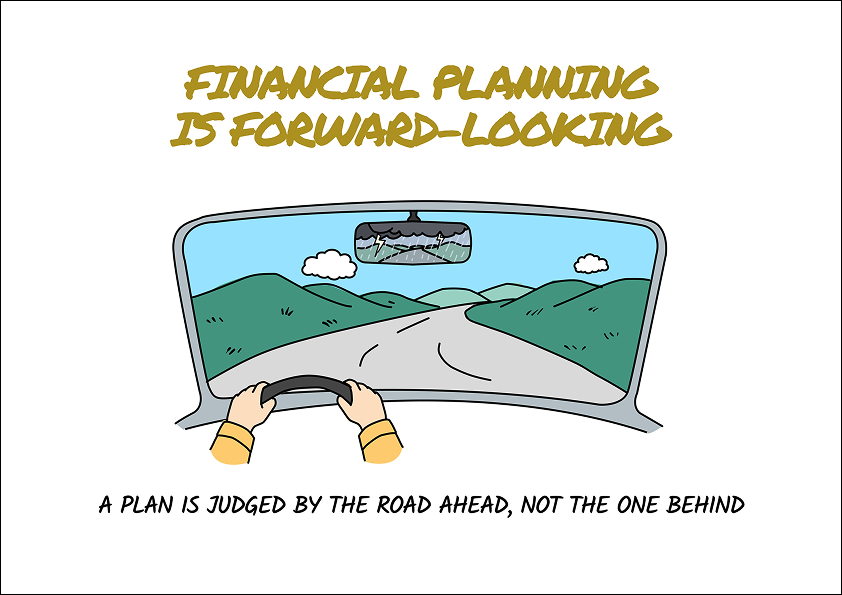
Financial planning is naturally forward-looking.
We cannot change what markets did last year, the decisions you made five years ago or the opportunities you might have missed.
What we can do is understand where you stand today and make thoughtful decisions about what happens from here.
That is why we believe a financial plan should never become something that is created once and then left untouched.
It should evolve as your life evolves.
You do not need to arrive at every meeting knowing exactly what you want to change or what your next move should be. That is part of the reason these conversations matter.
By regularly stepping back, reviewing what has changed and looking ahead, we can keep your financial decisions connected to the life you are working towards.
And ultimately, that is what the plan is there to do.
The value of investments and any income from them can fall as well as rise. You may not get back the full amount invested. Past performance should be used as a guide only and is not a guarantee of future performance.
Different investors will view these trade-offs differently depending on their objectives, time horizon and attitude to risk. If you would like to discuss how this relates to your own circumstances, please speak to us.
*Main image from HUM